

The 2026 EU PPWR will change takeaway packaging a lot. You cannot use PFAS anymore. You must pick materials that follow recyclability rules. You also need to get ready for tougher reuse goals. These rules will cost more money. You will have to change your packaging design. The table below shows how these rules can affect your business:
Projected Impact | Description |
|---|---|
Design Transformation | You must use new materials and designs. |
Compliance Costs | You will pay more to meet the new rules. |
Consumer Trust | Digital labels help people trust your brand more. |
You can handle these changes by picking eco-friendly choices like Biodegradable Pack.
The 2026 EU PPWR stops PFAS in food packaging. Use safer materials to keep people healthy and follow the rules.
All takeaway packaging must be easy to recycle by 2030. Make your packaging work with recycling systems to stop waste.
By 2030, at least 10% of your products need reusable packaging. Start planning now so you can reach this goal.
Put clear labels on packaging to tell customers about recycling and reusing. This helps people trust you and helps the planet.
Work with suppliers who have eco-friendly choices. Working together can help you follow the rules and protect the earth.
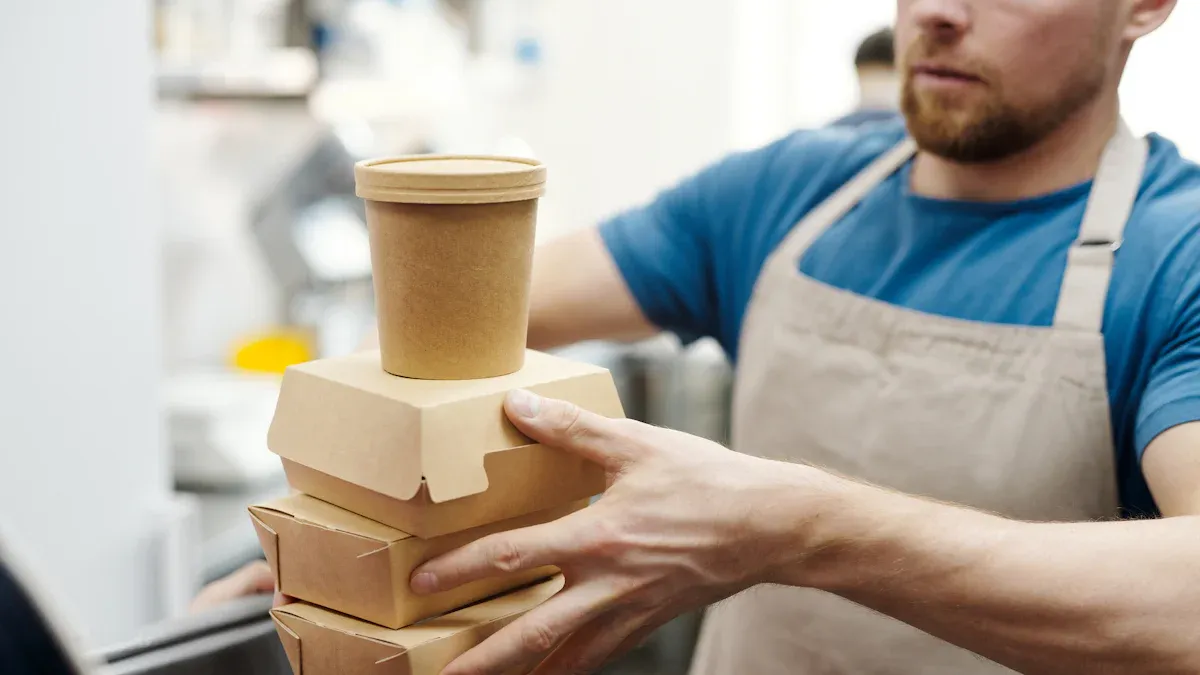
The 2026 EU PPWR will change takeaway packaging rules a lot. You have to follow new rules about materials, design, and waste. These changes help protect people's health and the planet. They also support recycling and cut down on pollution. You need to learn these new rules to keep your business safe and legal.
You cannot use PFAS in food packaging anymore. PFAS are chemicals that can hurt people and nature. The World Health Organization says some PFAS can cause cancer and other health problems. PFAS can also make vaccines work less well. They can raise bad cholesterol and blood pressure. PFAS are often found in pizza boxes and popcorn bags.
Tip: Using PFAS-free packaging keeps your customers safer and helps you follow the new eu packaging regulation.
The ppwr has strict rules for PFAS. You must pick safer materials for your packaging. Biodegradable Pack makes packaging from plant fibers and biodegradable plastics. These do not have PFAS and meet the new rules.
Regulation Area | Summary of PPWR Requirement | Impact on Takeaway Packaging |
|---|---|---|
PFAS Ban | Food-contact packaging must not exceed specified limits for PFAS. | Brands must stop using fluorinated grease-resistant coatings and use safer options. |
The PPWR says all packaging must be recyclable by 2030. You must design packaging that recycling centers can handle. Multi-layer packaging must change to one material or fiber-only. Every part, like lids and sleeves, must be recyclable. If over 30% of your packaging cannot be recycled, you cannot use it after 2030.
Target | Description |
|---|---|
Recyclability | All packaging must be made for recycling by 2030. |
Collection | Packaging waste must be collected and sorted for recycling by 2035. |
Reusable Packaging | Takeaway businesses must offer 10% of products in reusable formats by 2030. |
You need to check if your packaging meets these recycling rules. The EU PPWR wants you to use materials that fit current recycling systems. Biodegradable Pack makes products that can be collected, sorted, and recycled with today's technology. This helps you follow the packaging and packaging waste regulation and support recycling.
Note: Using recyclable and single-material packaging makes recycling easier and cuts down on waste.
The PPWR sets new goals to use less single-use packaging. By 2026, you cannot use single-use packaging for food and drinks eaten on-site in HORECA. By February 2027, you must let customers bring their own containers for takeout for free. By February 2028, you must offer reusable takeaway containers for free. By 2030, at least 10% of your products must be in reusable packaging.
By 2030, single-use packaging for some foods and drinks eaten on-site will be banned.
Foodservice operators must buy reusable options to follow the new rules.
By February 2027, foodservice places must tell customers they can bring their own containers for takeout for free.
By February 2028, businesses must give reusable takeaway containers for free.
You need to plan how to meet these reuse goals. Biodegradable Pack can help you switch to reusable and recyclable packaging that fits the new EU packaging rules. You also need to teach your staff and customers about these changes.
Regulation Area | Summary of PPWR Requirement | Impact on Takeaway Packaging |
|---|---|---|
Reuse System Promotion | Encourage reusable packaging in foodservice and delivery. | Cafés and delivery apps must offer returnable containers or reusable options. |
You must also use clear labels. Good labels help customers know how to reuse or recycle packaging. This helps you follow EU PPWR and builds trust.
The 2026 EU PPWR makes you rethink your packaging choices. You must focus on recycling, reuse, and safe materials. Biodegradable Pack has solutions to help you meet these goals and follow EU packaging rules.
First, learn about your current takeaway packaging. Check how much you use and what it is made of. Look at how you throw away each item. Write down all the details. This helps you follow the 2026 EU PPWR and other EU packaging rules. You should look at packaging color, recycled material, weight, and how well it can be recycled.
Here are some steps to get started:
Go through your packaging. Make a list of every item.
Check your packaging for banned things like PFAS and single-use plastics.
Write everything down. Good records help you follow packaging rules and extended producer responsibility.
When you find new suppliers, pick ones with eco-friendly choices. You want packaging that has recycled content and can be recycled. Some EU countries have different rules. Check local laws if you work in more than one country. You may have problems like different rules and not enough recycling places. Safety and cleanliness are important, especially for food.
Use this table to check if suppliers follow the packaging and packaging waste regulation:
Criteria | Description |
|---|---|
Conduct compliance audits | Check if packaging can be recycled and what it is made of. |
Establish partnerships with recycled suppliers | Work with suppliers who use recycled materials. |
Identify alternative materials | Find better options instead of PFAS and single-use plastic packaging. |
Prepare for labeling updates | Make sure labels follow new rules for environmental information. |
Engage with regulators and industry groups | Talk to EU regulators and industry groups to learn about rule changes. |
Biodegradable Pack makes packaging from plant fibers and biodegradable plastics. These products meet recycled content goals and recycling design rules. You can pick bowls, cups, containers, and trays that are easy to recycle and reuse. Biodegradable Pack also gives you personal help to choose the best packaging for your business.
You need to change your operations to follow ppwr goals. Start by using packaging with recycled content and that can be recycled. Design packaging so it can be recycled and reused. By 2030, all packaging must follow recycling design rules.
Here are some good ways to add new processes:
Pick advanced recycled materials. This helps you reach recycled content goals and ISO rules.
Test packaging for empty space, weak spots, and how long it lasts. This cuts waste and makes recycling easier.
Update labels. Make sure every package shows what it is made of and how to throw it away.
Get ready for new changes in your operations. The table below shows what you need to do:
Operational Change | Requirement Details |
|---|---|
Mandatory reuse for takeaway | By 2030, at least 10% of sold items must use reusable packaging. Customers must know about reusable options for free. |
Ban on certain single-use materials | By 2030, some packaging types like PET containers and polystyrene will not be allowed. |
Documentation and traceability requirements | Keep records to show you follow packaging rules, especially for reusable packaging. |
EPR obligations for food services | Food businesses selling packaged food must register and report as "first distributors" for EPR rules. |
Keep records and track every packaging item. The digital product passport helps you follow packaging and prove you follow the rules. Biodegradable Pack can give you packaging that meets these rules and helps you switch to reusable packaging.
Train your staff so they know the PPWR and packaging rules. Training helps your team follow rules for recycling, labeling, and reusing. Use a plan to cover all topics. The chart below shows how much time to spend on each part:
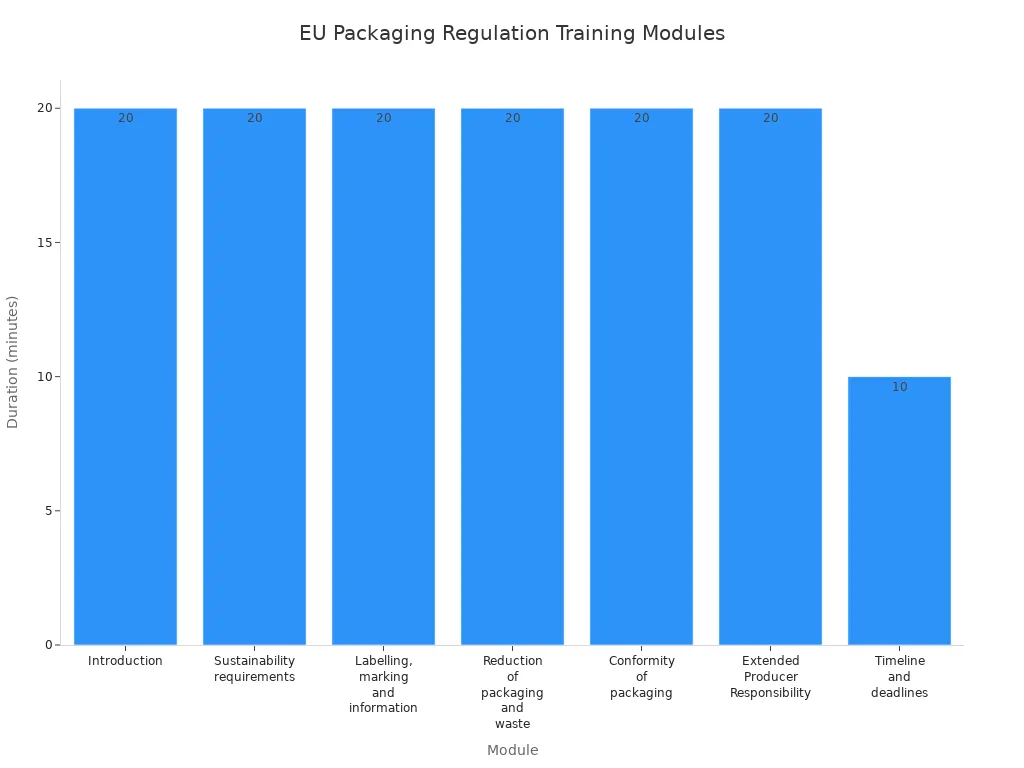
Your training should cover:
What the EU packaging rules are and what you must do.
Sustainability rules, like using recycled content and less packaging.
Labeling and environmental claims.
Cutting down on packaging and packaging waste.
Checking if you follow the rules and the EU Declaration of Conformity.
Extended producer responsibility, registration, and recycling goals.
Timeline and deadlines for the 2026 EU PPWR.
Work closely with your suppliers. Working together helps you reach recycled content goals and design packaging for recycling. For example, a Dutch snack maker worked with its supplier to change multi-layer foil bags to mono-PE. This made the packaging recyclable and lighter. The supplier gave data, recycling tests, and certificates. You can do the same with Biodegradable Pack. Their team helps you test, certify, and keep records for your packaging.
Tip: Meet with your suppliers often to learn about new rules and packaging ideas.
By following these steps, you can meet ppwr rules and get your business ready for the future. Biodegradable Pack helps you with eco-friendly choices, expert advice, and custom packaging for takeaway food.
It is important to know the main dates for the 2026 EU PPWR. These dates help you get ready and avoid rushing at the end. The table below lists the biggest deadlines for takeaway packaging under EU packaging rules:
Compliance Requirement | Deadline |
|---|---|
PFAS ban in food contact packaging | August 2026 |
PFAS content in food-contact packaging must fall below strict thresholds | August 2026 |
Only packaging with recyclability grades A–C can be marketed | By 2030 |
Plastic packaging must meet recycled content thresholds | By 2030 |
Packaging must prove practical recyclability at scale | By 2035 |
Only top grades (A/B) are permitted | By 2038 |
Prohibition of PFAS in food-related packaging | August 12, 2026 |
You also have to follow recycling goals and new label rules. By late 2025, countries must recycle 65% of all packaging waste by weight. By 2028, you must use new labels. The chart below shows how these dates connect:
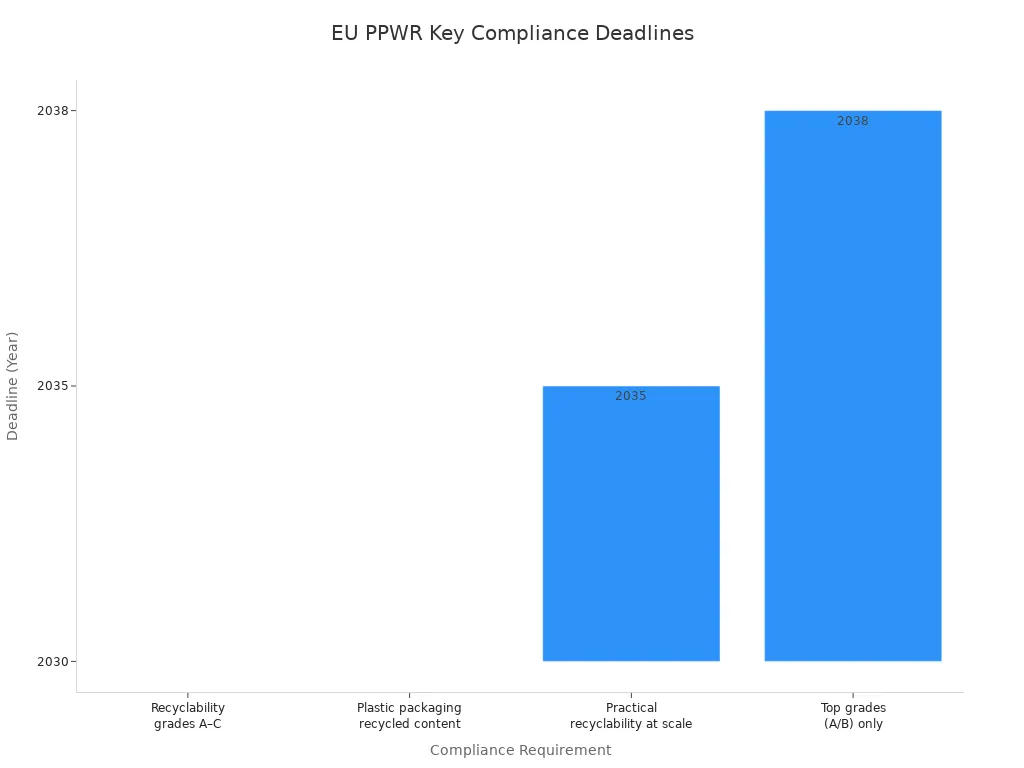
There is a simple plan to help you follow ppwr rules. Start with short-term steps. Check your packaging and remove anything with PFAS. Work with suppliers who know the new EU rules. Then, do mid-term steps. Make your packaging better for recycling. Get ready for official checks. In the long run, reach recycled content goals and show your results.
Here is an easy guide:
Check your packaging for PFAS and if it can be recycled.
Swap out items that do not follow the rules for safer, recyclable ones.
Teach your staff about the new rules and labels.
Work with suppliers to get packaging that is certified.
Keep track of your progress and update your records.
Get ready for new label rules by 2028.
Reach recycled content and reuse goals by 2030.
Tip: If you start early, you can avoid fines and make customers trust you more.
Biodegradable Pack has tools to help you at every step. Their team gives advice and packaging that matches the 2026 EU PPWR and other EU packaging rules.
Starting in 2028, new labeling rules will begin for takeaway packaging. Every package must have clear pictures that look the same in every EU country. These pictures show if the packaging can be reused, returned, or is made from recycled stuff. This helps customers know how to throw away or recycle packaging the right way. Using these labels makes recycling easier and helps people make smart choices.
All packaging needs to have the same pictures.
Labels must say if packaging is reusable, returnable, or recycled.
The goal is to help customers sort waste and recycle more.
You need to get ready for digital tracking. Many companies now put QR codes on their packaging. When customers scan these codes, they see what the product is made of and how to recycle or reuse it. This makes your packaging more open and helps people trust your business. Some companies use special software to keep track of packaging and follow new EU rules. You can also use digital tools to watch your supply chain and make sure you follow the rules.
Step | Description |
|---|---|
1 | Change packaging so it can be recycled or reused |
2 | Make sure labels match EU rules |
3 | Collect and manage packaging data in your supply chain |
4 | Watch for new rule changes and deadlines |
5 | Get ready for stricter checks and possible fines |
You can use QR codes, RFID, and even blockchain to track packaging and show you care about the planet.
The EU PPWR wants you to use more reusable packaging and support bring-your-own (BYO) programs. By 2027, you must follow new rules for using and tracking reusable packaging. By 2030, big grocery stores will need refill stations for food and drinks. Deposit-return systems for drink containers will also be used more. BYO programs let customers bring their own containers, which means less single-use waste and helps your community go green. These steps show your business cares about the environment and follows new EU rules.
You should start getting ready for the 2026 EU PPWR rules now. First, look at your packaging and labels to see if they follow the rules. Make a plan for reporting and signing up your packaging. Check that your packaging fits the new compliance rules. If you use sustainable packaging early, you get many good things:
You help the planet and make less trash in landfills.
You bring in customers who like eco-friendly products.
You save money and do not get fined.
Pick Biodegradable Pack's solutions to stay ahead and get a big advantage.
Start by looking at your packaging now. See if you use banned things like PFAS. Write down which items need to be changed. This helps you know what to do next.
Most big rules will start in August 2026. Some goals, like recycling and reuse, have later dates. You should look at each rule's timeline to keep up.
No, you cannot use just any biodegradable packaging. You must pick packaging that follows EU rules for recycling and materials. Not all biodegradable items are allowed. Always check if your packaging meets the new rules.